Donate Venue Hire
The Stationers' Company
The City of London Livery Company for the Communications and Content Industries

ARCHIVE NEWS

May 2026
Stationers' Company Archive Evening, 2026

Stationers' Company Archive Evening, 2026

8 MAY 2026

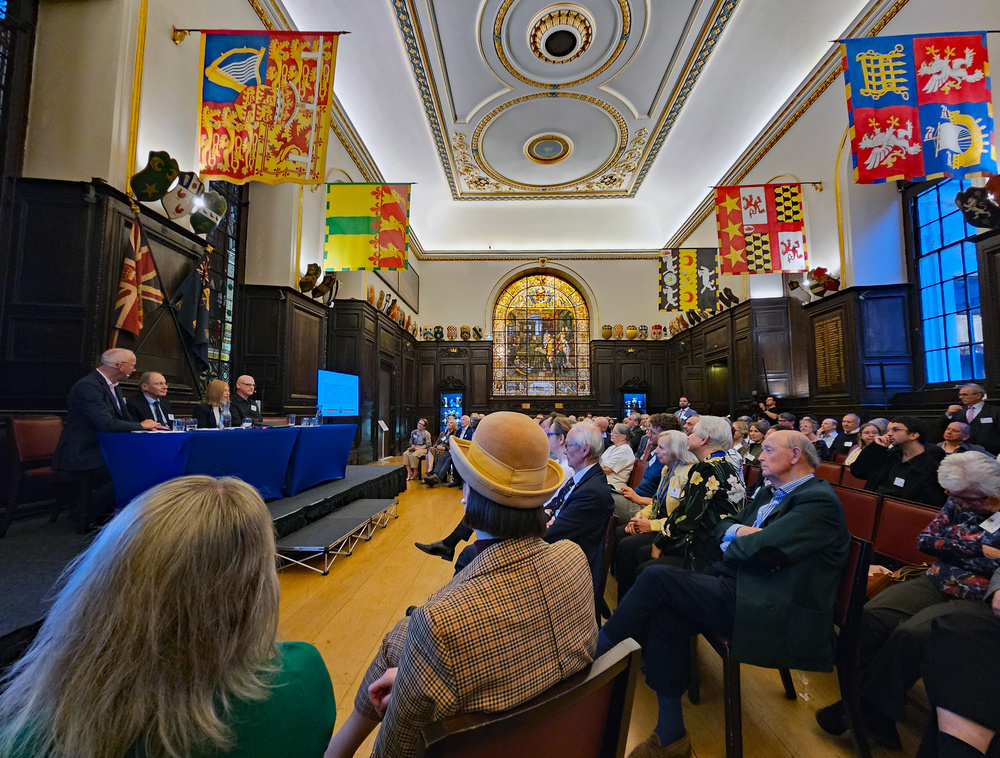
The Archives Evening took place at Stationers' Hall on 27th April 2026, offering a journey through the long and often unruly history of the printed word. 

A review by Liveryman Ian Mansfield.

The evening opened with a display curated by archivist Dr Ruth Frendo, featuring a selection of historic newspapers and pamphlets. Front pages from titles such as The Ladies’ Mercury, The Examiner and The London Gazette were laid out alongside photographs of Fleet Street in its heyday. Among them were contemporary reports on the 1926 General Strike, a timely inclusion given its centenary. 

After a welcome from the Master – complete with an anecdote about Robert Maxwell burning through £20 million on a doomed attempt to rival the Evening Standard – the formal proceedings began, moderated by Oliver Gaddesby, chair of the Library and Archives Committee. 

Former Press Association editor Jonathan Grun introduced the history of Fleet Street, taking his cue from an event in 1699, when Stephen Bryan was apprenticed to Stationer Bennett Griffin. Bryan later went on to print the Worcester Postman from 1709, which is still in print today as the Berrow's Worcester Journal.

Early publishers, he explained, faced significant constraints, not least the burden of stamp duty. It was the radical stationer Henry Hetherington who challenged this “tax on knowledge”, defiantly producing The Poor Man’s Guardian without paying the duty.

Another Stationer, John Walter, introduced the steam-powered printing press in 1814, which Jonathan noted was a mere 5 months after George Stephenson’s first steam locomotive.

And further transformation of news gathering was explored in the story of the former Master of the Stationers, Sydney Waterlow, who introduced the new telegraph to central London, but so objected to paying for the right to bury the cables under the road that he strung them over the tops of buildings.

As Jonathan explained, these forward-thinking entrepreneurial newspaper makers were a far cry from the stationers of old. The likes of Alfred Harmsworth of the Daily Mail, pandering to their readers with garish headlines and publicity stunts.

Jonathan jumped to 1931, explaining how the journalists clubbed together to form the  Newspaper Makers Guild, and proposed to build a Livery Hall of their own – a near skyscraper of a building which would be a major landmark today.

In the end, they merged with the Stationers and formed the modern-day Livery Company - and introduced our first lady liverymen.

There was Emily Peacock, the first woman reporter on the Daily Express and Betty Ross, an American journalist from the newspaper markers, and Pippa Woodman from the Stationers.

Jonathan closed by returning to his opening anecdote. More than two centuries after Stephen Bryan’s apprenticeship, Harry Godfrey Davie – editor of the paper Bryan founded – arrived at Stationers’ Hall to join the Company, neatly tying past and present together. 

If the first talk focused on newspapers, the second, by Dr Margarette Lincoln, shifted attention to the mass-market fiction that helped sustain them.

In an era when taxes still constrained publishing, cheap serialised stories, later dubbed penny dreadfuls, proved hugely popular. Titles such as Lives of the Most Notorious Highwaymen, Footpads, and Murderers were printed in weekly instalments, sometimes ending mid-sentence to entice readers back the following week.

Spurred on by improvements in the speed of printing and the falling price of paper, these cheap weeklies were a huge hit – and thanks to their gruesome writings, a cause of moral panic amongst the upper classes.

However, as Dr Lincoln explained, it was the tightening of copyright in 1842 that spurred the publication of these weeklies, as publishers could no longer pirate fake versions of popular novels.

Driven by faster presses and cheaper paper, these publications flooded the market. Their lurid tales of crime and adventure sparked widespread concern among the middle and upper classes, even as they sold in vast numbers. The tightening of copyright law in 1842, which curtailed the piracy of established novels, only accelerated their rise.

For a penny versus a shilling for Charles Dickens, it was an easy choice for many readers. Dr Lincoln said that by the mid-19th century, London was awash with stories of highwaymen, pirates and schoolyard mischief. Their cultural impact was profound—so much so that tales circulated of thrill-seekers venturing onto Hounslow Heath in the hope of encountering the kinds of romanticised robbers depicted in print.

There were stories for girls as well as boys, and Dr Lincoln produced examples of posters that could be displayed in shop windows to promote the weeklies to passers-by.

The moral panic led to changes though, and spurred the free public libraries movement to provide more wholesome reading material to the poor. Although, as Dr Lincoln noted, some of the most popular books to be taken out were the penny dreadfuls!

Despite the controversy, Dr Lincoln concluded that penny dreadfuls left a lasting mark, embedding vampires, villains, and dashing anti-heroes into popular culture. 

Having heard about Fleet Street through what it published, it was London tour guide Ross Hamilton to end the evening with a vicarious walk down the street of shame itself.

Starting with Elizabeth Mallet, who founded the Daily Courant in 1872 – using the money she and her husband earned printing the last words of the condemned to die at the gallows. Although, as he noted, on occasion, printing them before the person had actually died.

Accuracy, it seems, has long been negotiable.

One of the founding fathers of the newspaper guild, Edgar Wallace, whose memorial can be found at Ludgate Circus, was described as the most famous writer no one has heard of. It’s the newspaper barons that most people have heard of, and Ross took time to point out that the Daily Express’s famous art deco building earned the nickname of the Black Lubyanka, despite not looking anything like its Soviet namesake.

A quick trot through some other Fleet Street papers short-lived and otherwise, such as The Workers Dreadnaught, founded by the former suffragette Sylvia Pankhurst, who ended in jail for one of her front covers.

One of the last to survive on Fleet Street was the headquarters of Scottish publisher DC Thomson. Ross recalled teasing passengers on open-top bus tours by declaring that no journalists remained on the street, which often prompted an indignant response from an office window. 

Guests were also presented with replicas of the early prospectus for the Newspaper Makers Guild’s new livery hall - a copy of which is in the Stationers’ archive.

September 2025

Middle Temple and the World: A Molyneux Globes Study Day

Middle Temple and the World: A Molyneux Globes Study Day

5 SEPTEMBER 2025

Find out how early modern Europeans saw the world in this exciting study day, taking place at Middle Temple Library on  Staturday,11th October.

READ MORE

April 2025

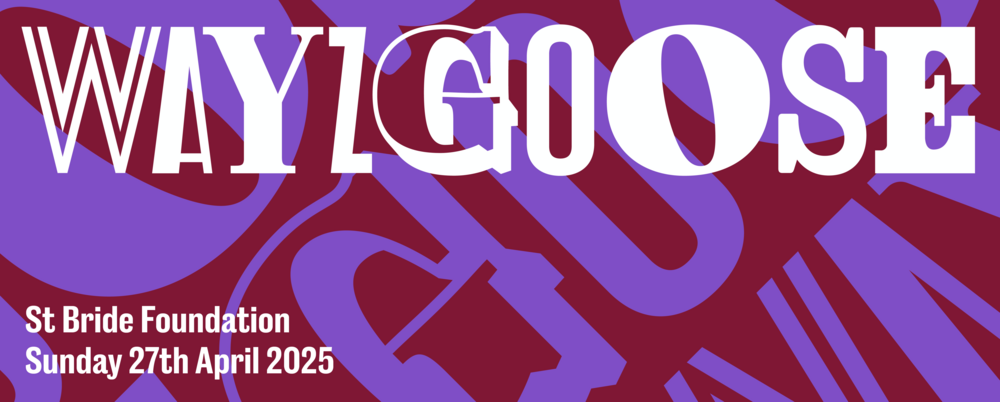
St Bride Foundation Wayzgoose 27 April

St Bride Foundation Wayzgoose 27 April

17 APRIL 2025

Our friendly neighbours and inky co-conspirators at St Bride Foundation invite us to join in their annual celebration of all things print-related!

The tradition of the wayzgoose as a key date in the printers' calendar is first mentioned in 1683. Joseph Moxon devoted a whole chapter of his Mechanick Exercises: ... Applied to the Art of Printing to the 'Customs of the Chapel', as the association of journeymen in a printing house was known.  Chief among these was the annual feast, aka wayzgoose or waygoose, given by the Master Printer to the workers, by all accounts a riotous and carnivalesque occasion. Moxon notes 'These Way-gooses, are always kept about Bartholomew-tide [24 August]. And till the Master-Printer have given this Way-goose, the Journey-men do not use to Work by Candle Light.' It's a tradition that has persisted in the printing community, with some modifications for modern sensibilities (not to mention health & safety concerns). The St Bride Foundation Wayzgoose kicks off the festive season well before St Bartholomew's Day, and promises to be an unmissable event. Check out their invitation below.

READ MORE

January 2025

Registered Designs, 1839-1991: A workshop at the National Archives, 5th March

Registered Designs, 1839-1991: A workshop at the National Archives, 5th March

9 JANUARY 2025

A practical training session at the National Archives offers a look at design copyright records.

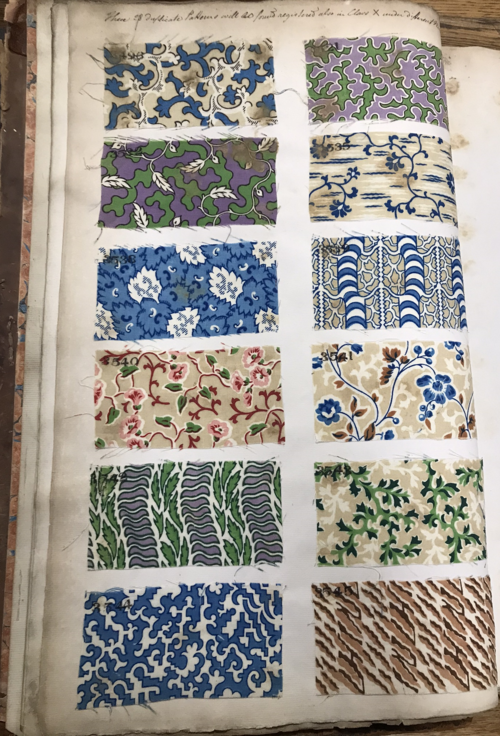
Lead image: BT 43/187 range of design numbers from 3496 to 3541: Twelve textile designs registered by Thomson Brothers and Sons in 1843. All images taken from the National Archives, Collection BT/43 Patents, Designs and Trade Marks Office and predecessor: Ornamental Design Act 1842 Representations
READ MORE

March 2024

'Steal not this book for fear of shame': a hidden gem in the Stationers' collections

'Steal not this book for fear of shame': a hidden gem in the Stationers' collections

20 MARCH 2024

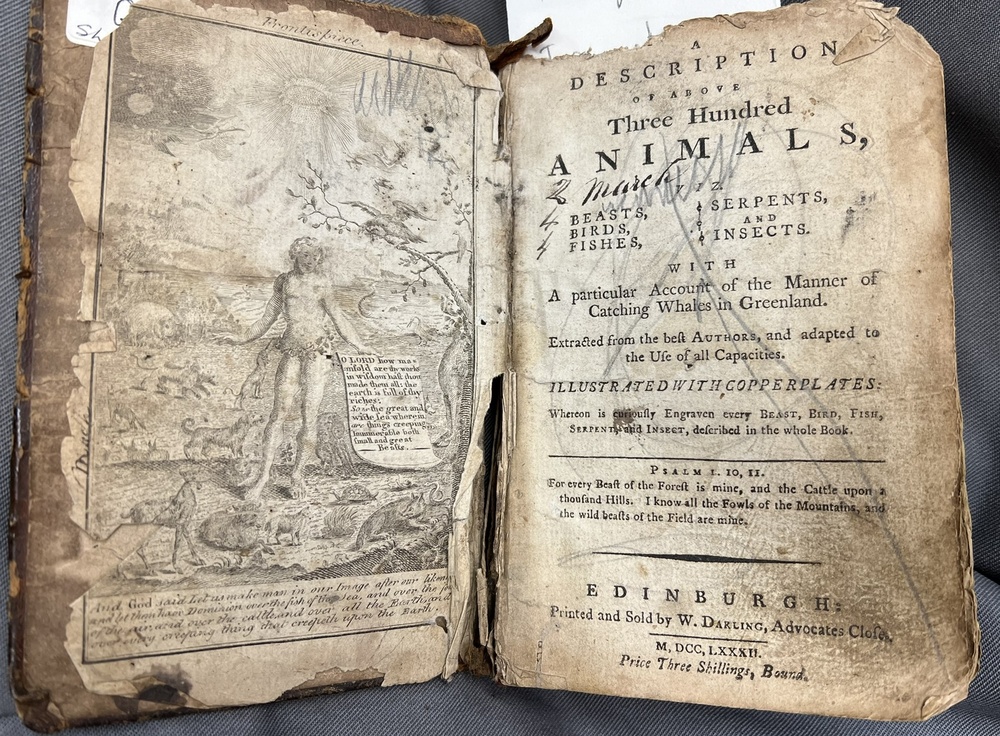
Postgraduate researcher and archive intern Beth DeBold uncovers one of the treasures of the Stationers' library, an eighteenth century children's book which found its way to the Hall all the way from Cumbria.

READ MORE

February 2024

A History of Cakes and Ale

A History of Cakes and Ale

9 FEBRUARY 2024

February 13th is Shrove Tuesday - which for Stationers means celebrating the centuries' old tradition of Cakes and Ale, established by bookseller John Norton in 1613. Here archive intern Beth Debold explores the history of this tradition.

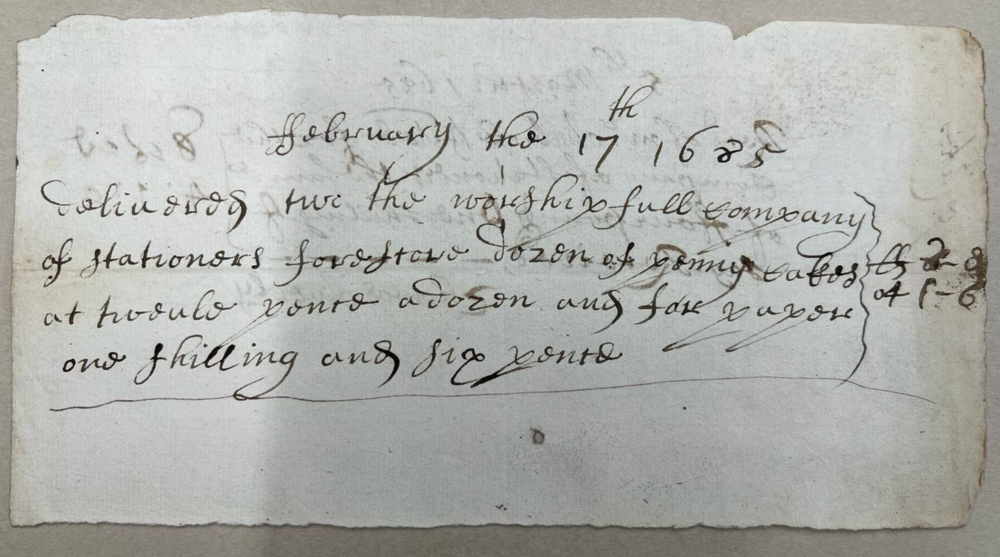
Main image:  Delivery note for baker Thomas Averley's 'penny cakes' in preparation for Cakes and Ale, 1685. Stationers' Company Archive, TSC/D/11/05


READ MORE

December 2023
Cambridge Bookbinding 1450-1770

Cambridge Bookbinding 1450-1770

15 DECEMBER 2023

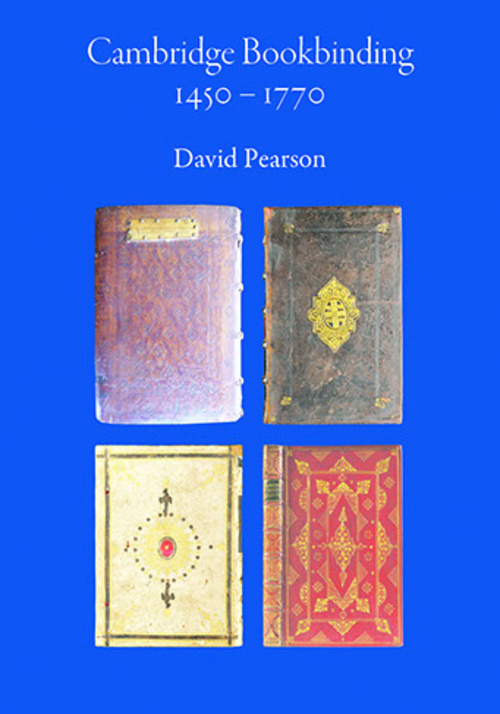
A fascinating new book by Liveryman Dr David Pearson, accompanied by a series of lectures, explores the history of book-binding in Cambridge.

READ MORE
'New directions in the study of the Book Trades '- call for papers

'New directions in the study of the Book Trades '- call for papers

4 DECEMBER 2023

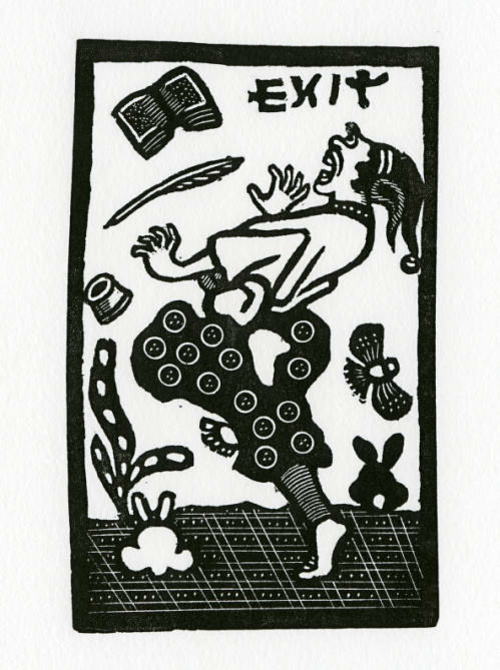
Interested in exploring new research avenues in the history of print? Want to contribute to the discussion? Then check out the call for papers for 2024's annual Print Networks/Centre for Printing History Conference, Unfinished Business: Progress, Stasis and New Directions in the study of the Book Trade since Peter Isaac, Newcastle University, 9-10 July 2024.

All images on this page: ‘Print taken from an original Joseph Crawhall II woodblock’, Crawhall (Joseph II) Archive, Special Collections, Robinson Library, Newcastle University, UK
READ MORE

June 2023

A special visit to the Archive...

A special visit to the Archive...

28 JUNE 2023

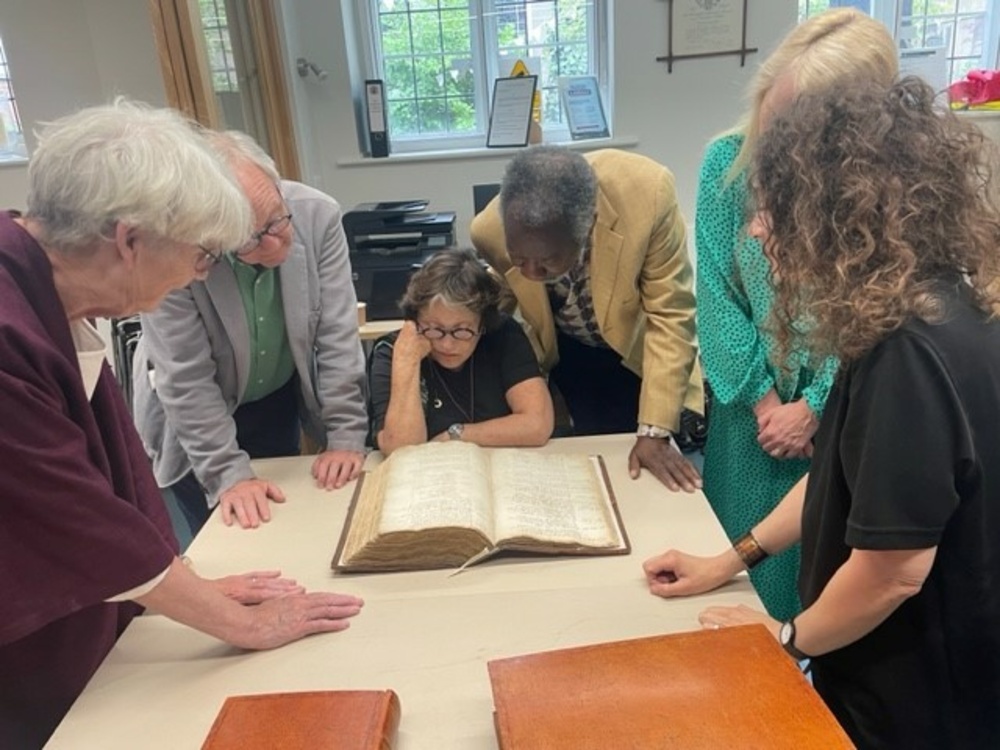
A very special visit from stars of the stage and screen Claire Bloom, Joseph Mydell and Bruce Alexander was the highlight of the week for the Stationers’ Company Archive.

Main photograph: Clustered around the Stationers' Register entry for Shakespeare's Folio are (l-r) Liverman Margaret Willes, Bruce Alexander, Claire Bloom, Joseph Mydell, Master Moira Sleight, and archivist Ruth Frendo
READ MORE
A visit to the Royal College of Music Museum

A visit to the Royal College of Music Museum

20 JUNE 2023

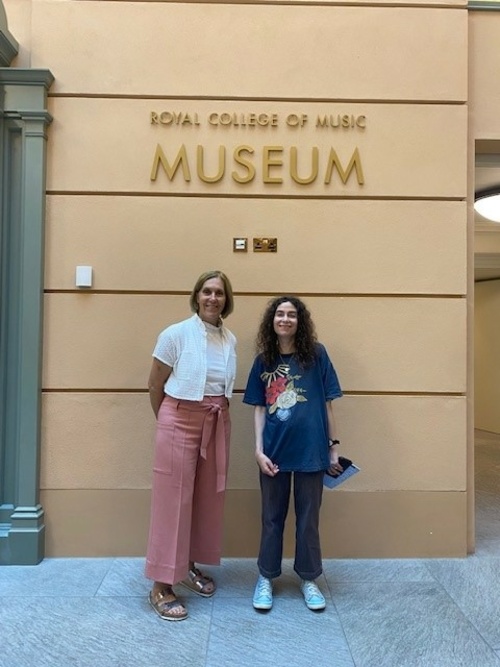
On June 13th, Court Assistant Carol Tullo and I visited the Royal College of Music Museum. Carol, who is the current Chair of the Library and Archive Committee, organised the meeting through the Musicians’ Company Junior Warden The Hon Richard Lyttelton, after last February's joint event The Shape of Music Copyright re-established closer working links between our two Companies. On the day, we were hosted by Stephen Johns, Artistic Director of the RCM, and Gabriele Rossi Rognoni, Museum Curator and Chair of Music & Material Culture. 

READ MORE

May 2023

Queen's College First Folio comes to Stationers' Hall

Queen's College First Folio comes to Stationers' Hall

25 MAY 2023

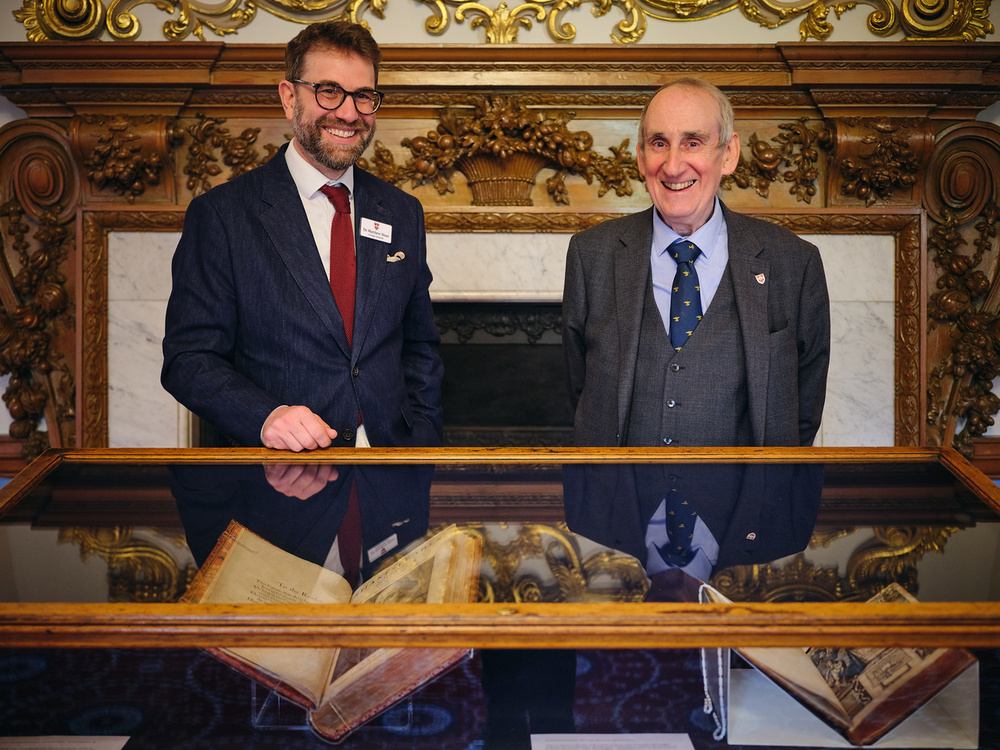
On Thursday 18th May, Stationers’ Hall was host to a very special guest: an edition of Shakespeare’s First Folio which once belonged to the great eighteenth-century actor and theatre manager David Garrick.

Main image shows Queen's College Librarian Dr Matthew Shaw and Court Assistant Professor Tim Connell with the First Folio. Photograph © Ben Broomfield for Queen's College Oxford
READ MORE
May events at St Bride Foundation

May events at St Bride Foundation

9 MAY 2023

Stationers and anyone with an interest in print history will be excited to learn of two upcoming events at St Bride's Foundation. On Thursay 11th May, at 7-8.30pm, designer and author Marcin Wichary will give a talk on the history and creative potential of typing keyboards. And on Thursday 25th May, 7-8.30pm, representatives of five printing institutions from across Britain and Ireland get together to discuss their histories and collections. For full details, see below.

READ MORE